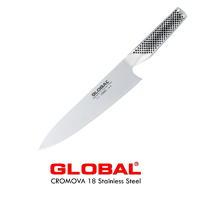
Japanese Kitchen Knives
Often MetroKitchen customer service experts are asked, “What type of knife should I buy? A Japanese knife or a German knife?” It depends on the types of foods you most often cook. We recommend Japanese knives when you cook many veggies, lots of chicken and fish or if you make sushi. Japanese knives have a more narrow angle, approximately 15 degrees as compared to most German knives at 20 to 25 degrees. As a result of this angle, a Japanese knife is a bit sharper but requires more frequent sharpening. These brands are manufactured in Japan and feature Western and Japanese styles of knives.
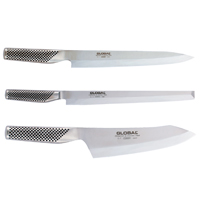
Razor sharp and exceptionally light, Global knives are unique in the world of fine cutlery. |
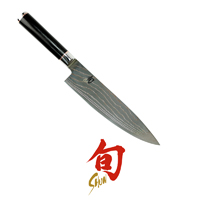
Stunningly beautiful, Shun knives features the look and benefits of Damascus steel, an ergonomic handle, and an exceptionally sharp edge. |

Miyabi knives are a revolutionary cooking tool because of their long-lasting sharpness, smooth cutting ability, rust resistance and handling ease. |
|